

 meritedge

If GCSE maths has turned your evenings into a battle, you’re in very good company. Maths is the subject that most often ends in frustration at the kitchen table, and if you’ve been searching for how to help your child with GCSE maths at home, you already know the pattern: a question gets harder, the mood drops, and what started as homework ends in a standoff. The good news is that the reason is rarely what it looks like, and once you understand it, helping becomes far less stressful for both of you.
The tears usually aren’t about the maths
When a child melts down over a maths problem, the real message is almost never “this equation is too hard”. It’s usually “I don’t understand this, and I don’t want you to see that I don’t.” Maths anxiety in teenagers is less about ability than about the fear of being exposed as not knowing. Once you know that, your job at home changes. You’re not there to force the answer out. You’re there to make it safe to be stuck.
That shift matters because a child who feels judged will shut down, and a shut-down child learns nothing. A child who feels it’s okay not to understand will show you where the trouble actually is — which is exactly what you need.
Find the exact gap
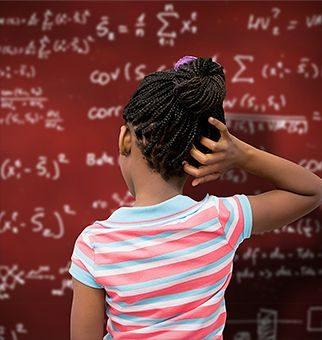
Maths is a chain. Miss one link, and everything built on top of it wobbles. So instead of re-explaining the whole topic, ask your child to show you the precise moment it stopped making sense. Nine times out of ten, the problem in front of them isn’t the real problem — something upstream is. A struggle with quadratic equations often turns out to be shaky algebra from a year earlier. Fix that, and the current struggle frequently dissolves on its own.
This is the single most useful thing a parent can do to help a child struggling with maths: stop treating the symptom and find the gap. “Show me the exact line where it stopped making sense” turns a vague, emotional standoff into a specific, solvable problem.
Keep sessions short, specific and calm
Twenty focused minutes on one topic beats two resentful hours covering everything. For GCSE maths revision at home, short and specific wins every time. End each session on something your child can do, not something they can’t — that last small success is what they’ll remember, and it’s what makes them willing to sit down again tomorrow.
And don’t feel you have to out-teach the teacher. You don’t need to remember how to factorise or complete the square. Your job is to keep it calm and help spot where the understanding breaks. The actual re-teaching, done well, is a separate task, and it’s completely fine to hand that part to someone who does it every day.
Watch the confidence, not just the marks
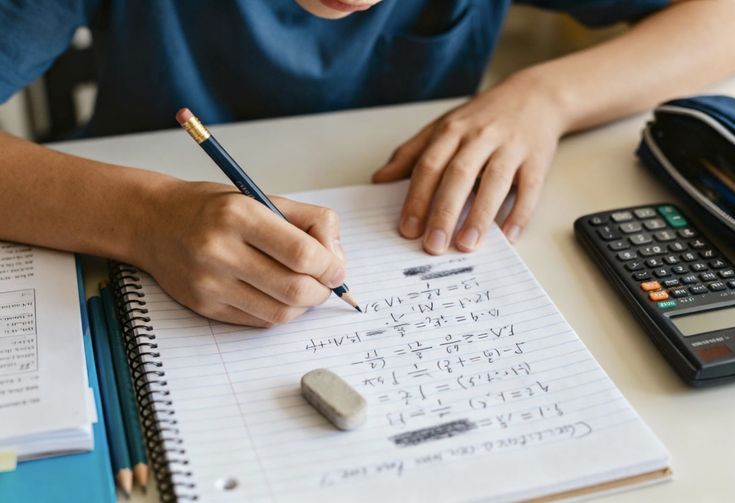
A child who has decided they’re “just bad at maths” will underperform regardless of their actual ability. That belief is usually the first thing to fix, and it shifts fastest when they start seeing themselves get things right. Small, visible wins rebuild the confidence that a run of bad marks knocks down.
So celebrate the process, not just the grade. “You worked through that without giving up” is a more useful thing to praise than a score, because it reinforces the behaviour that actually improves maths: staying with a hard problem long enough to crack it.
Help your child find the gap before frustration grows
Helping with GCSE maths at home isn’t about being a maths genius. It’s about staying calm, making it safe to be stuck, finding the real gap, and protecting your child’s confidence while they close it. Do that, and maths nights slowly stop being a battleground and go back to being ordinary evenings.
If maths has become a nightly fight and you can’t find the gap on your own, we can help. Book a quick chat and we’ll find the real gap behind the frustration — and show you what week one looks like.
If maths has become a nightly fight and you can’t find the gap on your own, we can help. Learn more about how our personalised pathways work or book a quick chat to find the real gap behind the frustration and see what week one looks like.